After a flood or a burst pipe: water out, house dried, repairs done.
After a burst pipe, a flood or a sewer backup, the first day matters. We pump the water out, set up drying equipment, and repair what the water damaged.
Restoration services
Pick a job
Choose one on the left and you get what it covers in plain English. If it is already leaking, flooding or you can smell gas, skip the reading and call.
Water Damage Restoration
Drying and repair of floors, drywall and framing after a leak or flood.
Flood & Sewage Cleanup
Standing water and sewage removed, then the area cleaned and disinfected.
Structural Drying
Commercial dryers and dehumidifiers until the framing is dry, not just the surface.
Mould Remediation
We find where the mould is, remove it, and fix the moisture that caused it.
What another day does to it
This is the one trade where the clock is the price. The same flood is two very different numbers depending on when somebody picks up the phone.
- Today
Water still standing on the floor
One more dayIt wicks up the drywall and down into the subfloor, and drying becomes removing and replacing.
- Today
Damp you can smell but not see
One more dayMould behind a surface that looked fine, which is containment and remediation rather than a dehumidifier in the corner.
- Today
A ceiling stain that has stopped spreading
One more dayFraming wet for long enough to matter, and a claim your insurer starts calling gradual damage rather than sudden.
- Today
Sewage on the floor for an hour
One more dayContamination pulled through the ductwork into every room the furnace serves, which costs more to clean than the flood did.
The first 48 hours decide the bill
Restoration is the one trade where waiting a day genuinely changes what the work costs. Wet drywall that dries in place is a repair. Wet drywall left three days is a replacement.
- Standing water anywhere, right now
- Extraction is the first hour, not the first day. Every hour it sits, it wicks further up the drywall and further into the subfloor.
- A musty smell two or three days after a leak
- Something behind a surface is still wet and has started to grow. The smell arrives before anything is visible.
- Drywall that feels cool and soft low down
- Water has wicked up from the floor. The visible tide line is always lower than the actual wet line.
- Hardwood cupping, or laminate lifting at the seams
- Moisture underneath. Sometimes it can be dried in place, but only if drying starts quickly.
- A ceiling stain that is still spreading
- The leak above has not been fixed. Drying anything below it is wasted until it is.
- Any sewage, at all
- This is a contamination job, not a water job. It needs removing, disinfecting and different handling for anything porous it touched.
What costs people their claim
The instinct after a flood is to clean up fast. Two of these four will cost you money with an insurer, so it is worth ten minutes of reading first.
Do not throw anything out before it is photographed
Your insurer settles on evidence. A damaged floor in a photograph is a line item, the same floor in a skip is a conversation you will lose.
Do not run the furnace or air conditioning through a sewage back up
The ductwork will carry contamination into every room in the house, and cleaning ducts costs more than the original cleanup did.
Do not assume open windows and a box fan are drying it
On a humid day you are moving damp air around. Structural drying needs dehumidification and readings, not airflow alone.
Do not paint or seal over a water stain
It hides the evidence without touching the moisture in the cavity. What grows behind it later is a bigger job than the stain was.
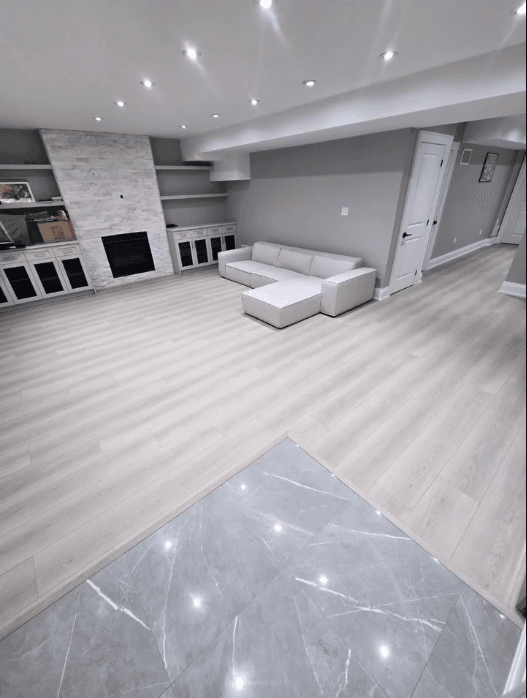
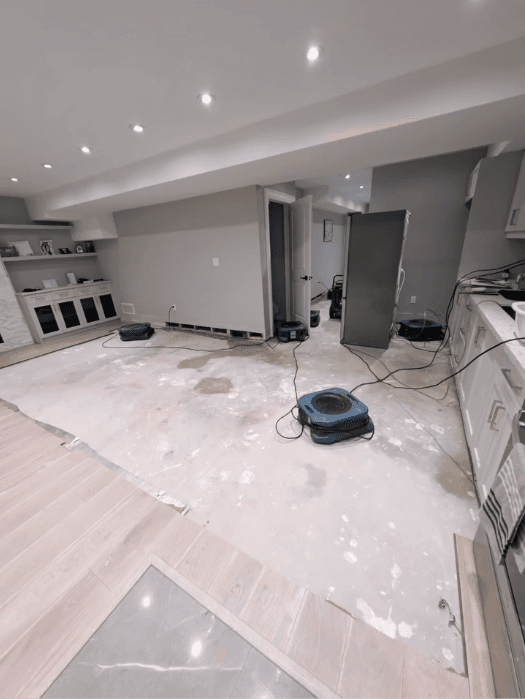
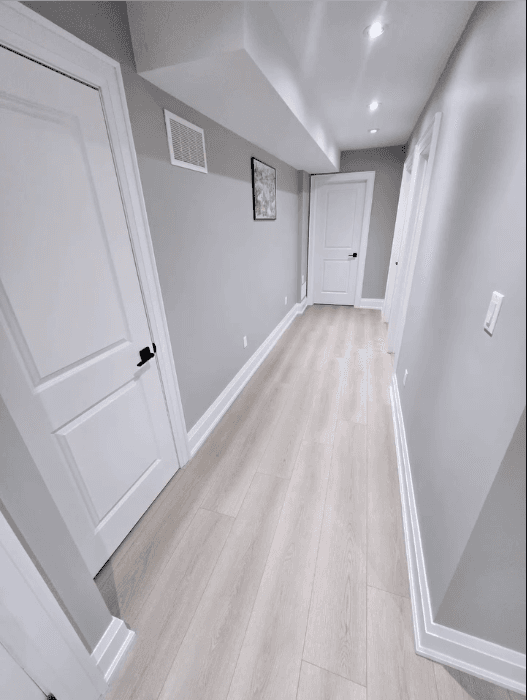
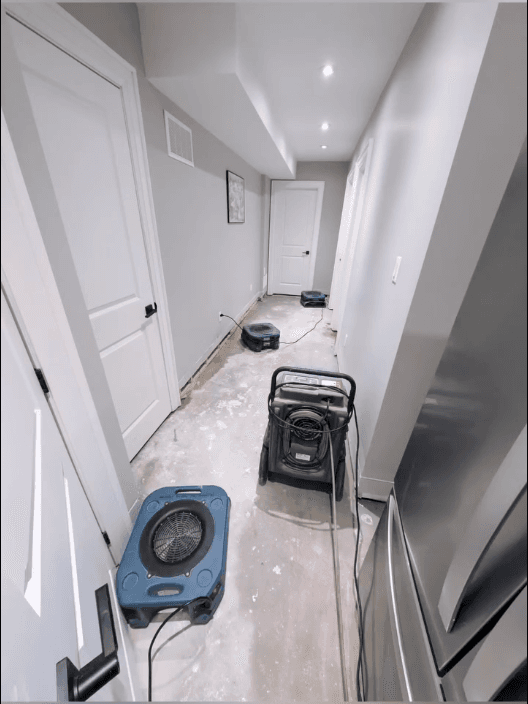
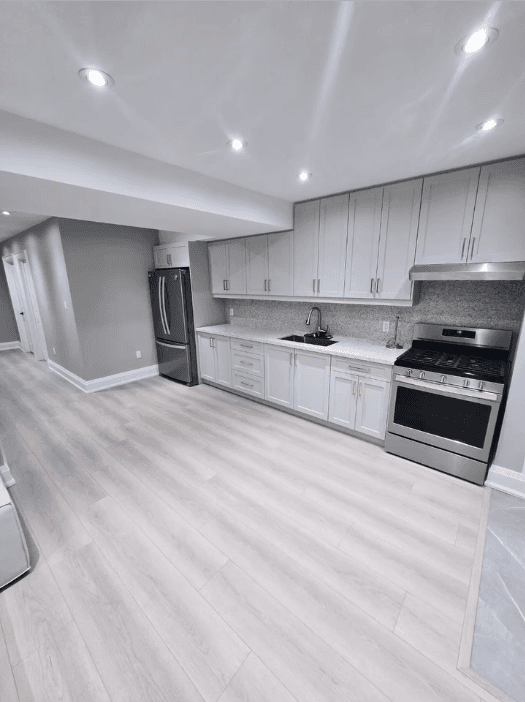
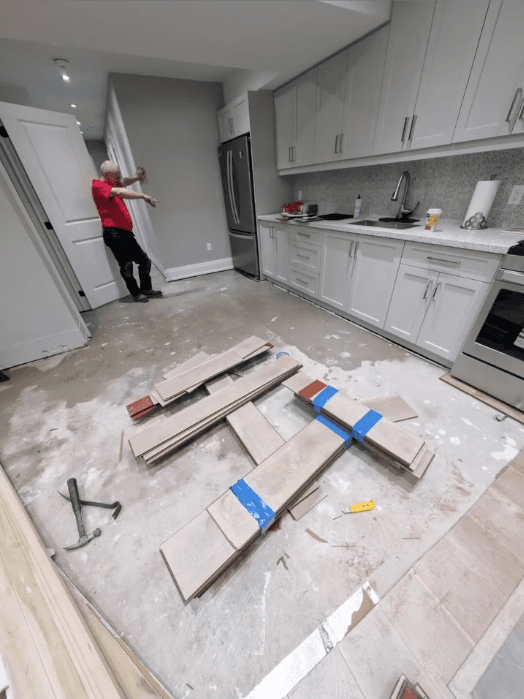
One flooded basement, fully restored
Water-damaged and torn up to a finished, livable space. One crew handled the restoration, plumbing and finish. Drag any photo to compare.
How a restoration job runs
Extract and make safe
Water out, power checked, and the category of water established. Clean supply water, grey water and sewage are handled three different ways from this point on.
Document everything
Moisture readings, photographs and an inventory of what was affected, taken before anything is removed. This is the part that carries your claim.
Dry to a number
Equipment set, then readings taken daily until the materials hit a target. Dry to the touch is not dry, and it is why things get rebuilt onto damp framing and fail later.
Rebuild it
Drywall, flooring and trim put back by the same crew that dried it, so nobody is waiting on a second company to schedule the finish.
What changes a restoration price
Restoration is priced on how far the water got and how long it sat, which is exactly why calling early is the cheapest decision available.
What kind of water it was
Clean supply water, grey water from an appliance, and sewage are three different categories with three different levels of handling and disposal.
How long it sat
The single biggest factor. Hours means drying. Days means removing and replacing what cannot be saved.
What got wet
Tile and concrete dry. Insulation, carpet underlay and chipboard largely do not, and once framing is wet the drying time goes up sharply.
Area and drying days
Equipment is priced by how much is running and for how long. A bigger wet area means both more machines and more days.
Whether the rebuild is included
Drying and reinstating are separable. Some people dry with us and finish themselves, and that is a perfectly sensible way to do it.
Restoration questions
Restoration across the GTA
Every job on this page, anywhere in the GTA. The crew comes to you: this is a mobile business, not a shop you drive to.
Need restoration help now?
Emergency or planned job, you get an arrival window on the phone and a price before any work starts. Anywhere in the GTA, 24/7.