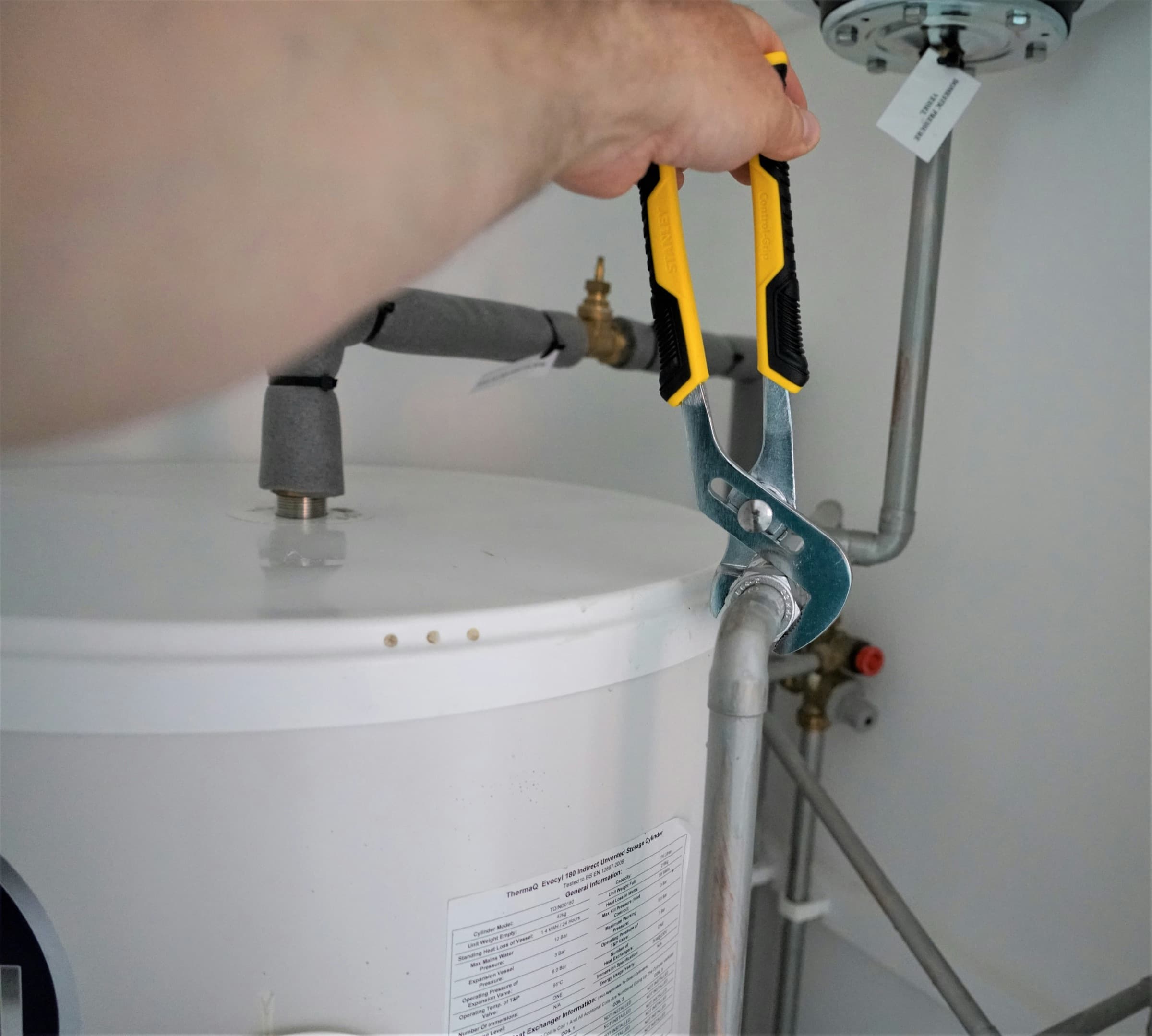
A cold shower is not an emergency in the way a burst pipe is, but it is the call we get most in winter. Before you pick up the phone, five minutes of checks will either fix it or tell us exactly what to bring.
First, what do you have?
- A tank is the tall cylinder, usually in the basement. Gas tanks have a vent pipe out the top and a gas line into the bottom. Electric tanks have a thick cable and no vent.
- A tankless unit is a wall-mounted box about the size of a suitcase, with a small display on the front.
1. Is anything else off?
Run a cold tap. If there is no water at all, the problem is your supply, not the heater. If you have gas heat, check whether the furnace is running too. A furnace and water heater both out at once usually points at the gas supply or a tripped main, and that is a call, not a fix.
2. Power and gas
- Electric tank: find the breaker. It is a double-width breaker, often labelled. If it has tripped, reset it once. If it trips again, stop. Something inside has shorted.
- Gas tank: look for the status light near the bottom. Older tanks have a pilot you can see through a small window. Newer ones blink a code. Note what it does.
- Tankless: read the display. An error code tells the technician most of the story before we arrive, so write it down.
Reset once. If a breaker trips twice, or a gas unit shuts itself down twice, leave it off and call. Repeated resets are how small faults become expensive ones.
3. The temperature dial
Someone may have turned it down, or a power blip reset it. The usual setting is 49°C (120°F). Anything above 60°C is a scald risk, especially for children and older adults, so do not crank it to compensate for a problem.
4. Look under the tank
Water pooling around the base, or rust streaks down the side, means the tank itself has failed. That is a replacement, not a repair. Turn the cold water inlet valve on top of the tank clockwise to close it, switch off the gas or the breaker, and call. Rusty or metallic-tasting hot water is the same story arriving a little earlier.
Tankless in a cold snap
Tankless units in unheated utility rooms or garages can freeze, and so can their intake and exhaust pipes through the wall. If it stopped working the same night the temperature dropped, that is probably why. Do not thaw anything with an open flame. Call.
What happens when we arrive
A licensed gas technician diagnoses it, tells you the price before touching anything, and if the tank is done, walks you through repair versus replacement, including tankless if it makes sense for your house. Gas connections, venting and relighting are TSSA-regulated work, which is why the checks above stop where they do.
No hot water and none of this helped? Call. We tell you the arrival window before you hang up.